Building a Multireligious Democracy
Power Grids, not Fireworks
Building a multireligious democracy is the long-term, steady work of creating and sustaining social infrastructure. At ICJS, we believe this work looks less like fireworks—bright, brief, and attention-grabbing—and more like a power grid: durable, interconnected, and life-sustaining.
Just as a power grid requires vision, planning, and ongoing maintenance, so too does the work of weaving together a multireligious, multigenerational, and racially diverse network of communities, institutions, and leaders. This kind of infrastructure may not always make headlines, but it ensures that our common life is illuminated and strengthened every day. Our task is to commit to building and tending this interreligious power grid—patiently, faithfully, and together.
Community Means Standing with our Neighbors
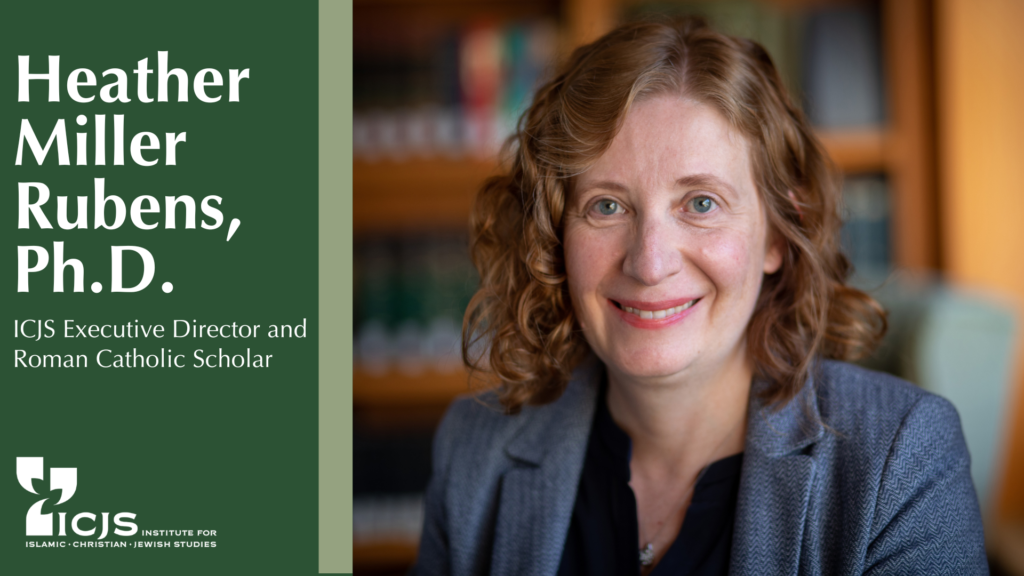 In this conversation, Heather Miller Rubens reflects on how ICJS understands community not as mere coexistence, but as a shared commitment to courage, care, and civic responsibility.
read more
The Urgency of Interreligious Pluralism
 A healthy democracy requires religious pluralism, where diverse communities embrace difference as a shared strength.
Read More
We Need More Religion-Talk to Safeguard our Democracy
 When communities embrace religion-talk, they cultivate a multireligious democracy where diverse beliefs strengthen civic life.
Read More
Events and Minicourses
Our courses and minicourses are building blocks in the foundation of a multireligious democracy. By bringing people together across faiths to study, question, and engage—whether exploring ethics, justice, power, or the role of religion in public life—these offerings strengthen relationships, deepen interreligious literacy, and help sustain the everyday work of creating a shared civic infrastructure.
Building a multireligious democracy with ICJS
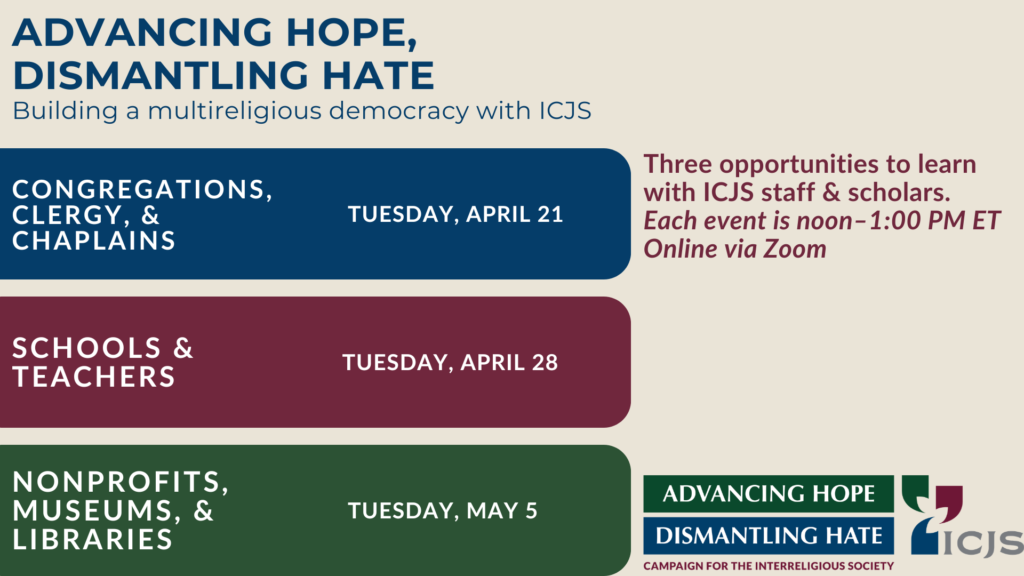
Can we build a multireligious democracy—one where Americans of every religion and no religion—have an equal voice in public life and are able to flourish together? ICJS says “yes”—we can, and we must!
Watch Video
Money, Lies, and God: Inside the Movement to Destroy American Democracy
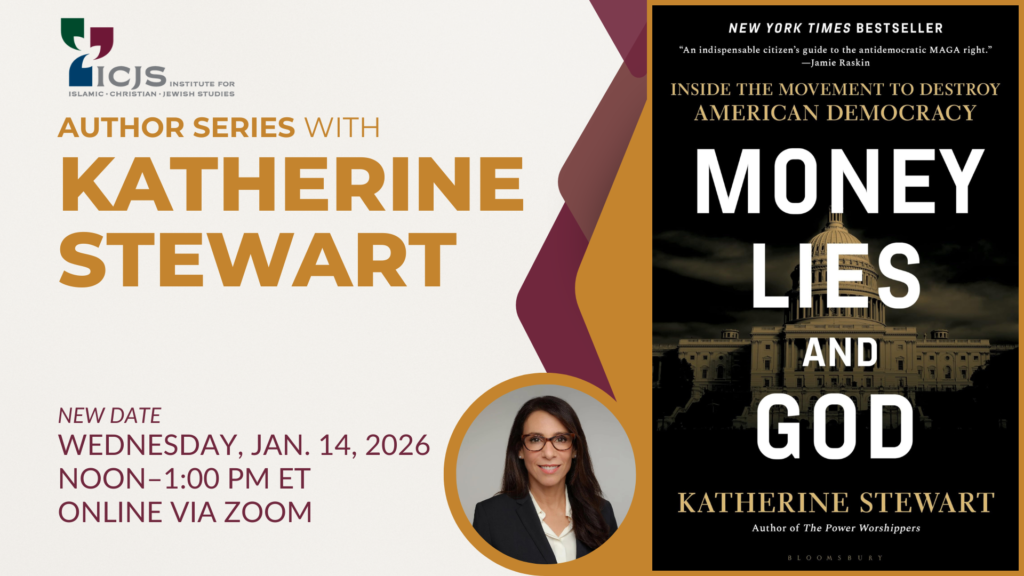 Author Katherine Stewart discusses how ultra-wealthy donors, conservative think tanks, and far-right religious groups are driving a radical anti-democratic movement.
Watch Video