Standing with our neighbors is not simply an ideal, it is a responsibility rooted in Community, one of ICJS’ five core values:
Responsible civic life requires more than tolerance and coexistence. It requires participation in community, respectful dialogue, mutual understanding, and flexibility with resources and positions. We build robust interreligious communities that interweave the civic, educational, and religious dimensions of our lives together.
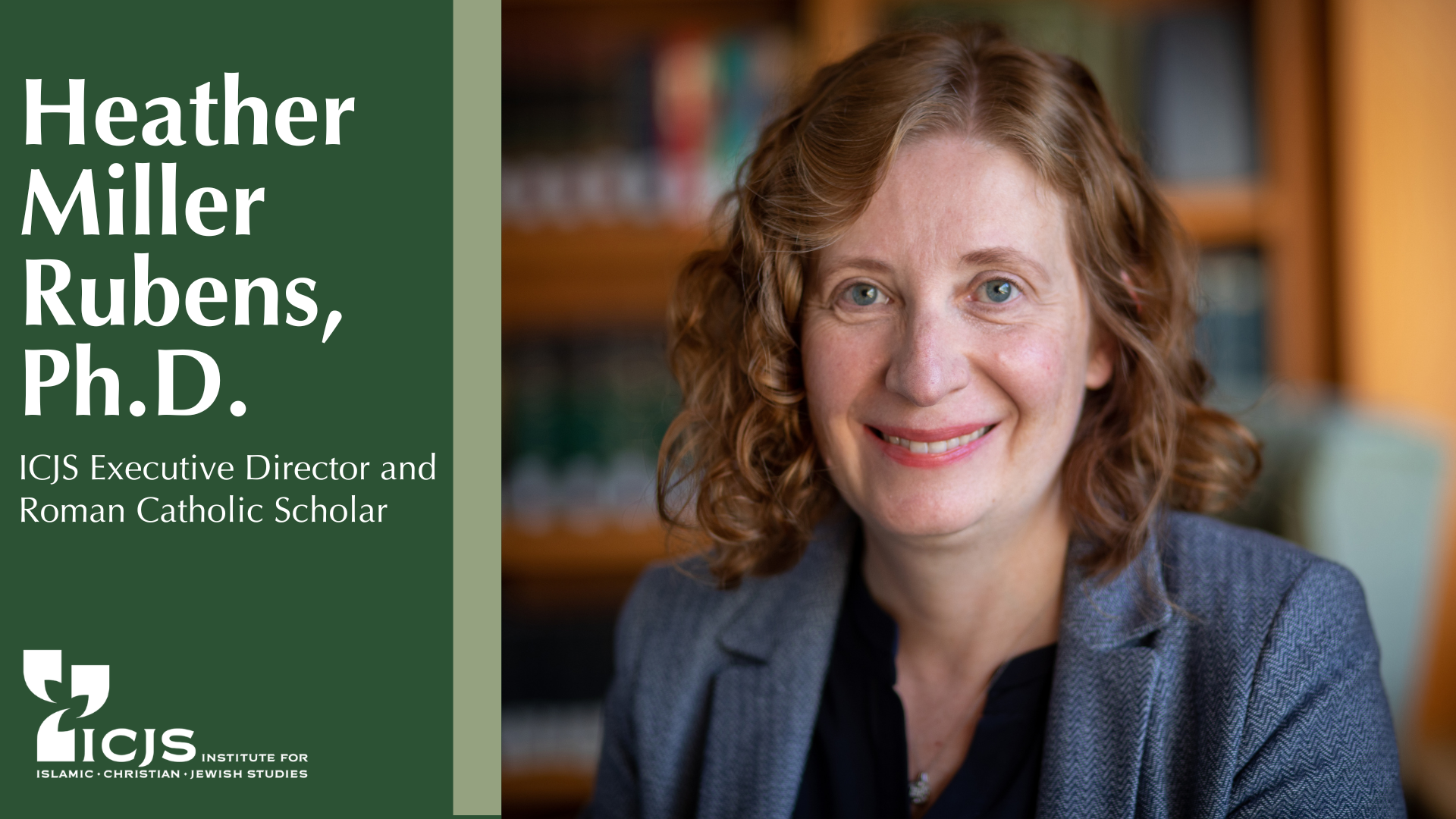
In this conversation, Heather Miller Rubens reflects on how ICJS understands community not as mere coexistence, but as a shared commitment to courage, care, and civic responsibility.
Q: Our ICJS Values speak about community as more than coexistence. What does “community” actually mean in the ICJS approach?
A big idea I’ve been thinking about is how much interreligious engagement is both a this-worldly project and an other-worldly one. I think sometimes when people hear “interfaith dialogue” or “interreligious relations,” they think that such efforts are abstract or extraneous—nice-to-do, but not necessary or relevant. There’s often a pull toward thinking interfaith/interreligious is all about the eschatological, the end times, or some kind of utopian vision of what harmony across religions might look like. This is a misconception that ICJS challenges—we see interfaith learning and interreligious dialogue as being both a sacred and a civic project. It is necessary to the work of dismantling religious bias and bigotry. It is work that is vital, urgent, and capable of addressing what divides us—fear, intimidation, misinformation, and distrust.
At ICJS, interreligious encounter is at its most powerful when it strengthens religiously diverse civic communities right here and now. That doesn’t mean we avoid theological questions or questions around sacred knowledge—we absolutely engage those areas. But such questions should always return to our current moment: how can we live together more faithfully as neighbors, citizens, and members of a shared community? What wisdom from our religious traditions helps us do this sacred and civic work?
Q: How does interreligious community strengthen democracy?
As we approach the 250th anniversary of the Declaration of Independence, it is worth remembering this vitally important sentence from the preamble: We hold these truths to be self-evident, that all men are created equal, that they are endowed by their Creator with certain unalienable Rights, that among these are Life, Liberty and the pursuit of Happiness.
This was a bold idea—that all people are equal in civic and political life, endowed with equal rights by the Creator. This is an aspirational vision of what kind of community could be possible. The founders knew that when you look out at the world that you see real differences—around religion, gender, race, wealth, abilities, and in other arenas—they didn’t try to erase those differences. Rather, what Jefferson pointed towards was a civic life where all stood as equals with their differences; a society where diverse people could flourish side-by-side. Of course, 250 years ago, that vision of equality was very narrow. It did not include enslaved Americans, women, and others who were excluded from voting and equal civic participation. In many ways that kind of full equality is not something we have ever fully achieved in the United States—but it is a worthy aspiration; it is something that we must keep striving towards together.
And it is important to remember that the quest for civil rights in this country has always been pursued in both secular and sacred terms. Religious values often shape ethics and how we think about public life, including politics and economics. So in building capacity to engage in interreligious dialogue we’re not just strengthening interpersonal relationships. We’re strengthening our capacity to build a democratic life that accounts for and accommodates our differences, while also demanding a vigilant commitment to political equality. We need to keep weaving the civic and religious dimensions of our lives together to secure equality. That means we have to develop knowledge and fluency to engage in hard civic conversations and interreligious dialogues with one another.
Indeed, religious differences can be some of the deepest differences we have with our neighbors. And in a way, that’s exactly why developing interreligious fluency is critical for democracy. If we can figure out how to live together, build trust, and stay in community across religious differences, then we’re also practicing the habits democracy requires—like listening; asking questions when we don’t understand where our neighbor is coming from; disagreeing constructively; and working together on building a healthy and resilient civic life.
Q: Are there any figures who have been influential for you in your thinking about community?
I have long been a fan of Dorothy Day. She’s an inspirational American Catholic leader, thinker, and writer whom I deeply value. I go back to her words again and again. She was one of the founders of the Catholic Worker movement here in the United States—which focused on issues related to poverty, wealth inequality, and the dignity and rights of workers. In the Catholic Church she is on the road to sainthood for her works, her spiritual example, and her theological and political leadership. As part of the Catholic Worker movement, Dorothy Day talked about creating ‘houses of hospitality’ and reflected on what building community actually looked like in practice. What does it look like to welcome your neighbors? To be responsible for your community members, warts and all? What does it mean to show up, even when you don’t want to? Dorothy Day recognized and named the hard reality of community-building—that sometimes houses of hospitality were actually houses of hostility. The day-to-day work of being a neighbor and a responsible citizen can be frustrating and demanding, and she didn’t shy away from naming that frustration, anger, and resentment were part of the reality of building community. She put these hard truths on the page; she offered it up in prayer; and then she got back up and kept doing the work of building community.
I think there’s a lot happening right now that makes community building feel hard or even impossible. How can we build a shared life when we are racked by anger and despair? How do we live with people that we don’t like? How do we live with people that we believe don’t share our morals or values? Dorothy Day’s reflections on “Houses of Hospitality: also being at the same time “Houses of Hostility” is very real and resonates in this current moment. Dorothy Day is not offering an idealized or sanitized version of what commitment to neighbors actually takes. She is calling us to transcendence—to building welcoming communities grounded in hospitality. But she is also acknowledging that relationships are hard; people can be very difficult and demanding. We need to be kind to ourselves in this work, and we need to rely on God’s grace as well as our neighbor’s grace, when building community. When we’re trying to live in a certain aspirational moral register (like being hospitable), we can feel overwhelmed, or like we are not up to the task because we are angry or frustrated. We should be able to name things, like community-building, as hard—even if we are fully committed to doing the work.
Q: If readers remember only one thing about why community matters, what do you hope it is?
I hope that everyone can remember that our way forward is together. We are bound up with one another—our lives are intertwined with our neighbors. Building community is hard work, but it’s worthy work.
February 2026
Like what you read? Subscribe to the ICJS newsletter for more.