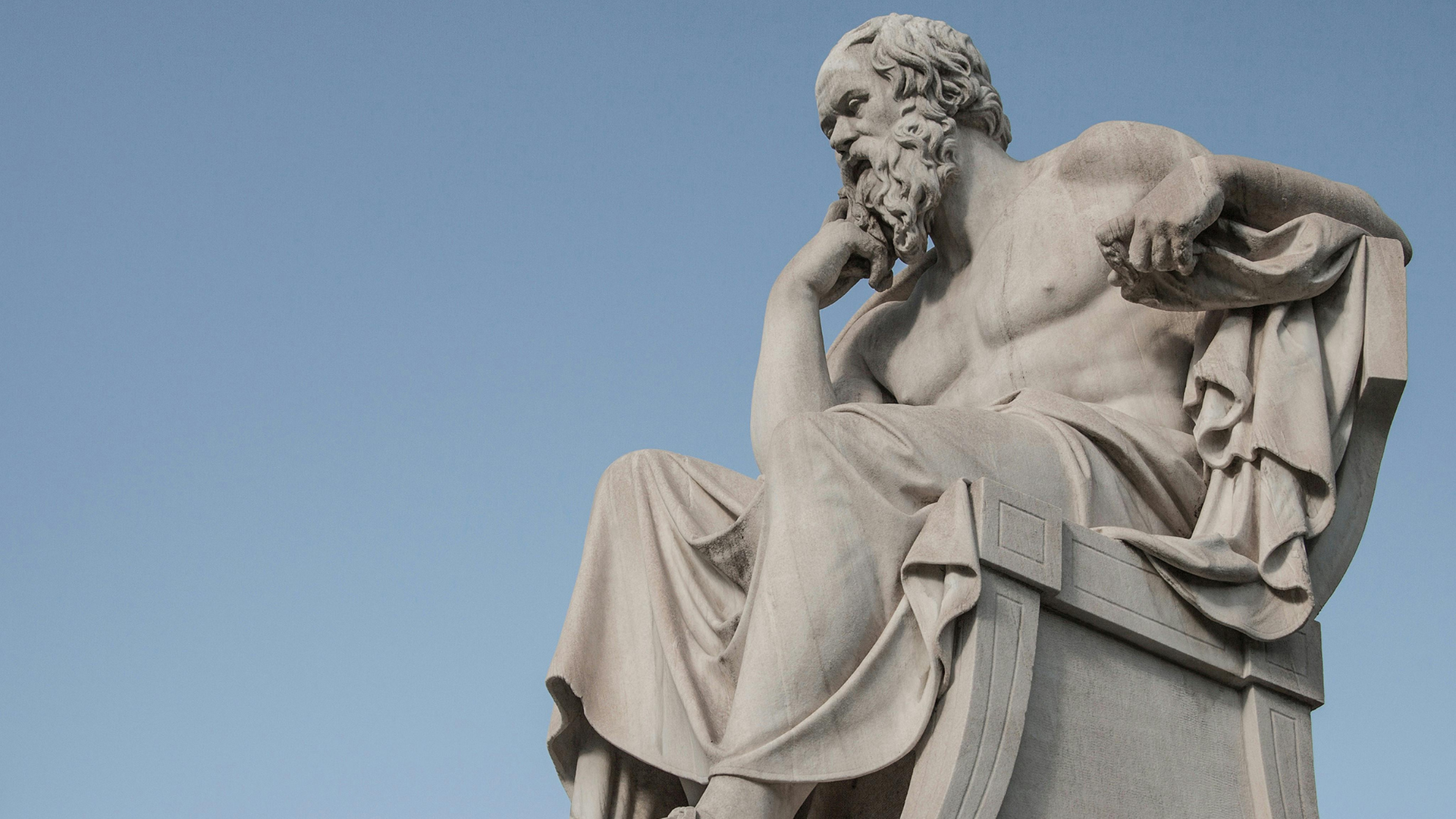
Some people balk at the idea of “no stupid questions.”
I have had students cringe or call out their friends when a classmate brashly asks a question that seems insensitive or reveals cultural ignorance. Like when a student asked me this year around the winter holidays how it was possible that I had Christian and Jewish parents, blurting out, “How did they even meet?”
Certainly some questions require unpacking. But when a student asks a sincere question across difference, even if unintentionally offensive, it is not a stupid question. It deserves a thoughtful answer. How else do we expect anyone to learn to ask a better question? To borrow language from the parable of the four children in the Passover haggadah, the response to the “wicked” child, who asks an othering question, is not to deny them an answer or tell them to stop asking questions.
ICJS’ framework for dialogue stresses that good questions are those asked “to clarify and increase… understanding of someone else’s point of view.” A key part of my experience in the ICJS Fellowship for Teachers has been learning to ask wiser questions to increase my own and my students’ interreligious learning. For instance, a few months into the fellowship, I was lesson-planning for introducing the character Antigone to my students. She has strong religious convictions which lead her to defying her uncle’s order prohibiting her brother’s burial.
When I taught the play before, I provided context about burial practices in Greece at the time and shared a few examples of contemporary burial practices in different modern religions before diving into discussion of Antigone’s dilemma. But after an ICJS meeting, I decided to shift the contemporary connection aspect of the lesson to include a write-pair-share about their experience with rituals around death to provide more space for student processing of their experience and to discuss these with classmates. I asked them: “In your life, is religion an important part of funerals and burials?” When it came to the shareout, I found the responses surprisingly monolithic and discussion short; multiple students affirmed that burials and funerals are often at religious sites, overseen by religious figures, including religious texts. After class, when I read more of the students’ writings, though, I realized there had been greater difference that wasn’t voiced. Multiple students simply wrote no, religion wasn’t important or burials were not important in their religion.
I suddenly better understood why these students might not have shared aloud in the full group. My question had unintentionally coded “yes, religion is important in funerals and burials” as a positive thing, since I’d just explained the importance of burial to Antigone and Greek society. Instead of starting class with a more open-ended question that allowed students to think about rituals around death in their lives, I had actually created a barrier to students connecting with the character and the text because they didn’t attend burials. And in using the term “religion” instead of something broader like traditions or practices, I alienated students who were atheist, agnostic, or questioning. I pulled up my lesson plan and wrote down a new phrasing to try out, earlier in the lesson: “When someone passes away, what traditions in your experience are important in honoring that person?”
ICJS has been helpful in continually reminding me that interreligious difference is not something that you learn about a couple times and then have mastered it. Instead, interreligious learning is a continual process where each encounter requires new attention and consideration.
The fellowship has helped me be more curious–and ask that extra question. For instance, when a student was writing a research paper about the benefits of Ramadan, I followed my normal instincts of helping her navigate discussion and asking if she was enjoying her holiday this year. But without ICJS, I wouldn’t have asked the extra question: How was she finding Ramadan at school specifically? She said she generally was happy to be in the cafeteria at lunch with her friends, but she guessed she could stay in a teacher’s room if she had a hard day fasting. I let her know she could absolutely stay in my room if she ever needed a food-free space. She only took me up on the offer once during the holy month, but even if she had never come, I was glad to have inquired and offered.
One reworded text-dependent question. One student at a lunchless lunch bunch. These might seem small tokens in the grand scheme of things. But life is a sum of such moments. And if ICJS has taught me anything, it’s that more moments should be filled with dialogue. Sharing, listening, and reflecting moment by moment is how we iterate ourselves into the people we want to be and the world we want to see. In a pluralistic society, we are always in the process of learning about ourselves and others since we’ll never stop having encounters across difference, and being attuned to the small encounters primes us to respond with integrity when bigger moments arise.
May 2026
 Rachel Cawkwell teaches at Carver Vocational-Technical High School, and was a 2025-2026 ICJS Teachers Fellow. Learn more about the ICJS programs for teachers here.
Opinions expressed in blog posts by the ICJS Teacher Fellows are solely the author’s. ICJS welcomes a diversity of opinions and perspectives.
If you are an educator or know an educator in the Baltimore area who might be interested in learning with us next year, click here.