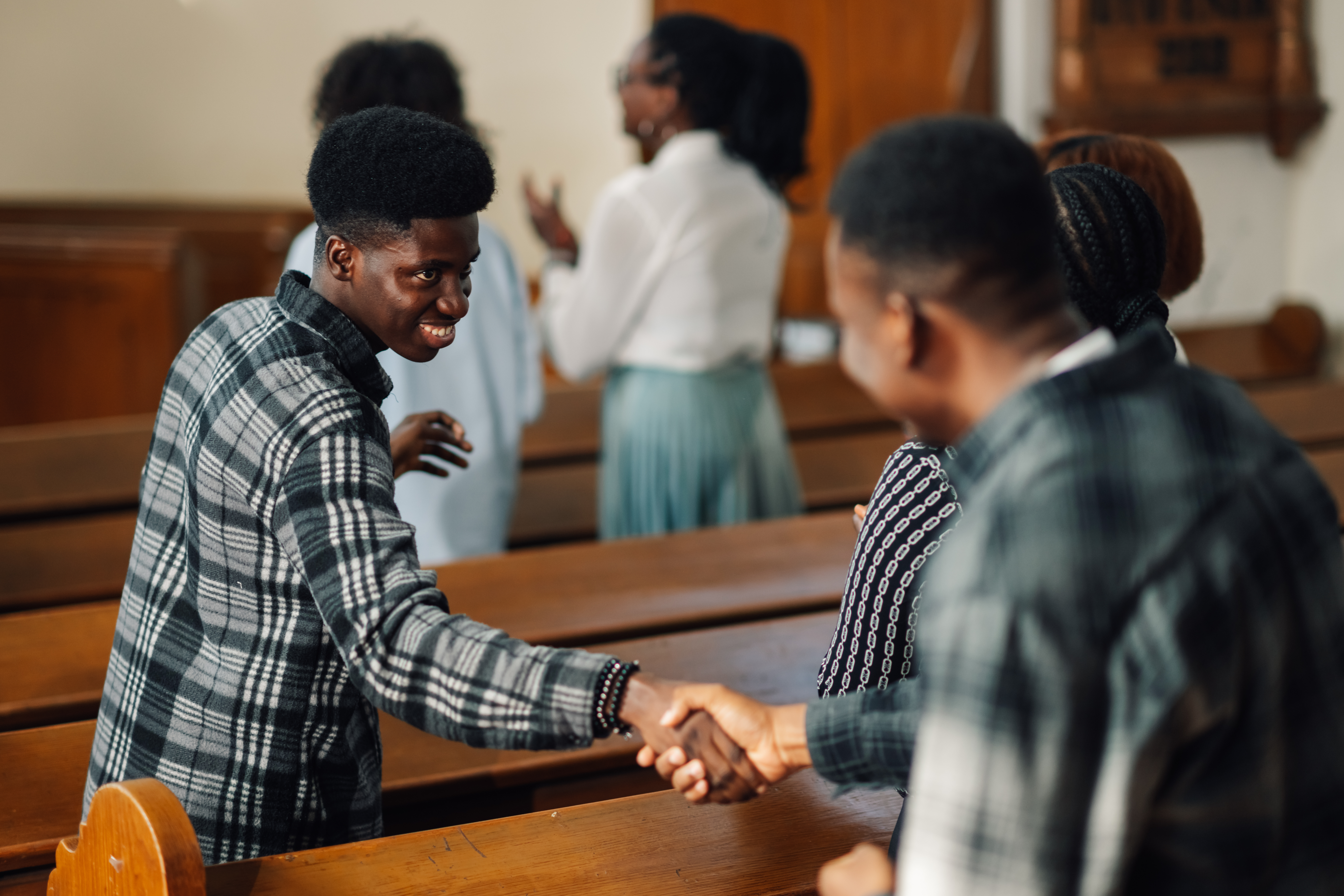
When religious leaders step into sacred spaces beyond their own traditions, the experience can be powerful—and sometimes uncertain. What should you wear? When do you participate, and when should you simply observe?
These are the kinds of practical and spiritual questions explored in Sacred Rhythms, Shared Spaces, a recent workshop led by the Rev. Alisha Wimbush, program director for religious leaders at the Institute for Islamic, Christian, and Jewish Studies (ICJS). The four-week learning experience invited religious leaders and community practitioners to reflect on how people of faith can show hospitality across religious difference—both as guests in one another’s sacred spaces and as hosts welcoming neighbors into their own.
“The seed for this workshop was planted several years ago,” Wimbush said. “I had been doing interreligious engagement workshops, but I kept coming back to the question: how do you enter into someone else’s sacred space?”
The timing of the workshop made that question especially meaningful. This year, the Christian season of Lent and the Muslim holy month of Ramadan overlapped, offering participants an opportunity to think about how neighbors from different traditions observe sacred time simultaneously. Jewish participants also hosted Jewish Shabbat gatherings during the workshop, creating opportunities for participants to experience a range of practices firsthand.
Learning to Be a Thoughtful Guest
Much of the workshop was discussion-based, encouraging participants to reflect on their own motivations for engaging across religious difference. Drawing on the work of scholar Marianne Moyaert, participants explored the many reasons people may attend or participate in the rituals of another tradition—from curiosity and solidarity to spiritual learning.
Wimbush also emphasized practical wisdom. For those visiting another tradition’s sacred space, she offered a simple guideline: reach out before you arrive.
“Don’t just show up,” she said. “Especially in the times we’re living in now. Reach out and say, ‘I would love to come and experience your worship service. What do I need to know?’”
That small act of communication signals respect and helps prevent misunderstandings about dress, participation, or the flow of a service.
Practicing Hospitality as a Host
Participants also discussed what it means to be a gracious host. Religious leaders often become so familiar with their own liturgy and rituals that they forget how confusing they can be for newcomers.
“Imagine experiencing your own service for the very first time,” Wimbush encouraged participants. “What questions would you have?”
Thinking from the perspective of a guest can help communities create more welcoming environments. Simple steps—such as explaining unfamiliar practices, offering translations, or briefly describing what is happening in a service—can make a powerful difference.
Another important conversation centered on the difference between appreciation and appropriation. Participants explored the idea of “holy envy”—the admiration people may feel when encountering meaningful elements of another tradition—but also the need to avoid adopting sacred symbols or rituals without understanding their deeper meaning.
“If you don’t understand the full meaning of a symbol or sacred object,” Wimbush advised, “ask questions.”
Hospitality in Practice
Beyond discussion, the workshop included a practical component. Participants were encouraged to visit sacred sites or attend religious gatherings in their communities and reflect on the experience.
Those visits took many forms. Some participants attended interfaith iftars during Ramadan. Others joined Shabbat services or community conversations about the future of theological education. One participant even helped with the celebration following a Bar Mitzvah.
Julia Zubiago, a divinity student at Boston University, said she hosted an interreligious dinner in her home. Partnering with a Jewish friend, Zubiago, who is Catholic, organized a Saturday-night ritual patterned on a national “Repro Shabbat.” Although the gathering had been planned prior to the workshop, it ultimately informed and enriched her engagement with its themes. Around the table, friends from different religious backgrounds shared food, stories, and reflections on how faith shapes their commitments to justice and reproductive freedom.
For Jen Kilps, network executive of the Minnesota Interfaith Network, the most valuable part of Sacred Rhythms was the peer community it created, a welcome outlet after the stress of participating in the response to ICE raids in Minneapolis. “Just hearing what others were experiencing in their work meant a lot,” she said. “It felt like a safe place to talk honestly about the challenges we face.”
Kilps also shared that the overlap of Lent, Ramadan, and the Bahá’í fast inspired her organization to co-host a Fish Fry Iftar. Christians bring the tradition of a Friday fish fry—complete with local walleye—while Muslims host the breaking of the Ramadan fast, and everyone could join a conversation about what fasting means to each tradition.
How Hospitality Shapes Leadership
In the final workshop session, participants shared what they learned from their site visits—what surprised them, what stood out, and what they hoped to explore further.
One unexpected theme emerged during those conversations: the role personal experiences of welcome—or exclusion—play in shaping religious leadership.
As participants shared stories about their journeys into ministry, some reflected on challenges they faced along the way, including moments of religious trauma or lack of support within their traditions. Those experiences, Wimbush observed, often shape how leaders extend hospitality to others.
“How we have received hospitality,” she reflected, “shapes how we provide hospitality.”