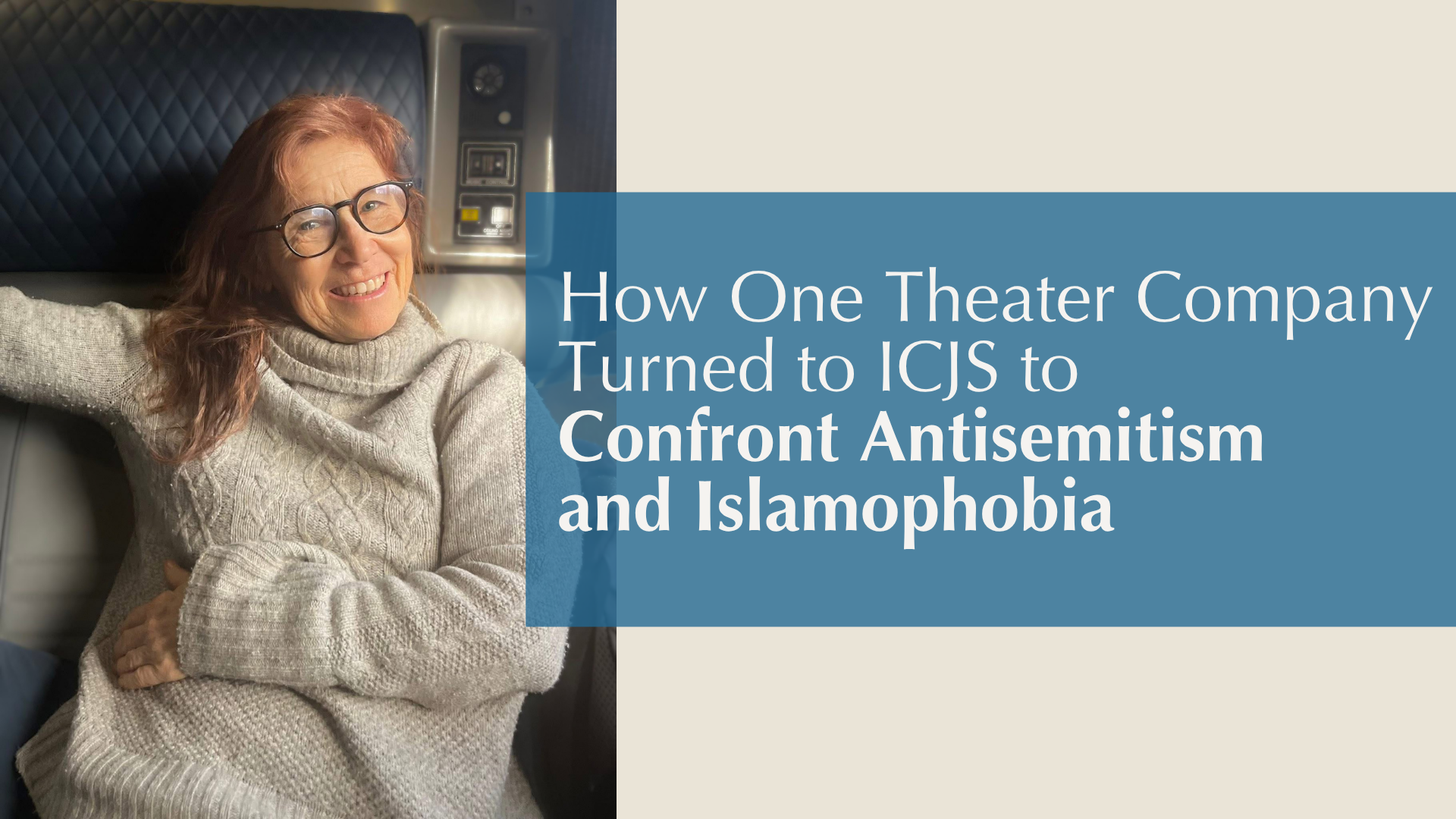
When antisemitic comments and activities in the community were plaguing a longtime member of Shotgun Players, a theater company in Berkeley, Calif., artistic company member and director Katja Rivera felt compelled to address the issue—and knew just where to look for resources that could help.
“She felt that we really needed something to defend the wave of antisemitism that she personally was experiencing and seeing in her life, and in several different institutions,” Rivera said, and added that another staff person asked if they “should include Islamophobia too” when searching for educational materials.
Rivera is sister to ICJS Communications and Marketing Director John Rivera. Her small but mighty nonprofit was in search of learning materials that “had a low financial impact,” she said. “I asked my brother and he said, ‘Yes, we’ve got these things—check these out.’”
Eye Opening Historical Context
Rivera, who also heads the Shotgun Players’ Equity, Diversity, Inclusion, and Belonging—or EDIB committee, decided to use two different ICJS resources. “Recognizing and Responding to Everyday Antisemitism and Islamophobia” explores the subtle religious bias and bigotry that can often go unnoticed and unconfronted. “Antisemitism (Un)defined” is a three-part minicourse led by ICJS Jewish Scholar Benjamin Saxthat breaks down the history and politics of defining antisemitism, explores two definitions and two worldviews of antisemitism, and then concludes with what antisemitism looks like in the 21st century.
She and her colleagues were surprised at the breadth of the information covered in the courses, such as how far back in history antisemitism can be recorded, and how it’s evolved over time.
The group’s general consensus was that because many people aren’t equipped to recognize antisemitism and Islamophobia, a lot of the conversations that do happen do so with a substantial lack of historical knowledge. So they found learning context and history incredibly important and useful.
Rivera also works with the San Francisco Shakespeare Festival and will direct the Free Shakespeare in the Park program this summer. She said she is “newer to that company, but I feel like they would benefit (from engaging with the ICJS resources) as well.”
ICJS’ library of on-demand video courses are available online at no cost. When initially offered live on Zoom, ICJS courses typically include break-out sessions (not recorded) where participants can actively engage with the material. So subsequent course engagement is asynchronous.
Putting in the Time, Committed to Change
Rivera and seven other committee members, made up of actors, board members, and other stakeholders from their local artistic community, watched the two courses, each at their own convenience. It required a few hours of time, but it was a commitment they were dedicated to fulfill, even though it was outside of regular committee meeting times.
“I felt like people were very invested in it, particularly because they wanted to support the committee member who brought the whole subject up, Rivera said. “So people were very committed to engaging with the material.”
“But there was this hunger for role playing,” she added, and a desire to engage in dialogue about what they learned. “Really kind of embodying some of the information.” Rivera also recalled a committee member saying “It’s emotional, very personal work.”
Dialogue, the Next Step
The colleague who initially made the request to Rivera to address antisemitic sentiment agreed that they needed to go to the next level and engage as a group and in a focused way to really dig into the issues. To that end, Shotgun Players will soon work with a facilitator from the Bay Area Jewish Community Resource Center—a date for that has not been set.
Rivera said she is looking forward to the in-person dialogue, because “there is a pretty solid level of trust amongst each other on the committee.”
April 2026
Like what you read? Subscribe to the ICJS newsletter for more.