
I joined the ICJS Fellowship for Civic and Nonprofit Professionals carrying a concern common to many people whose faith has been fortified through trials and affirmed through a multitude of blessings. As a Black American Muslim deeply committed to my communities and to the work of sharing the beauty, ethics, and truth of Islam, I wondered whether the firmness of my convictions might be read as dogmatic rigidity in an intentionally pluralistic space.
My concern was not a fear of the interreligious dialogue per se or of others’ perceptions of my beliefs, but of remaining fully faithful to my own worldview, which includes some politically unpopular stances. I knew that I wanted to engage other participants with the openness, humility, and genuineness that this type of work requires. However, I did not want my sense of empathy and my desire for peaceful co-existence to coax me into quietude when a strong voice was necessary.
A Gradual Shift of Perspective
My concerns about maintaining integrity and balance began to soften early in the cohort, not through a dramatic incident, but by repeated exposures to the seriousness with which other participants approached their social justice work. As I listened to them speak about service and responsibility, I was struck less by our theological and life stance differences than by the depth of goodness that seemed to animate most of their efforts.
I was not simply hearing operational strategies or their institutional goals; I was encountering their sincere commitments to restoring human dignity and exercising compassion. That recognition shifted my posture.
Instead of seeing our differences as something to navigate carefully, I began to see them as the locus in which truth might be encountered in unexpected words and ways.
The Believer’s Lost Property
I remember sitting next to a Jewish colleague as she spoke with passion about her work with young people; I have done similar work. I heard my Christian colleague detailing the sacrifices made to feed those who are food insecure; I help with such work. Although we may articulate our motivations very differently, I have learned to look behind and beyond our respective histories and religious vernacular and extract the hidden gems in our words. While discovering those gems, my heart recalled a Prophetic saying: “The wise statement is the lost property of the believer; wherever he finds it, he is more worthy of it” (Hadith Jami’ at-Tirmidhi 2687 and also Ibn Majah 4169).
Remembering that statement gave me a new way to understand interreligious work. In Islamic thought, any true wisdom belongs ultimately to Allah. When something true or morally clarifying appears through another person, it is not strange simply because it seems to come from outside my faith tradition. It is a form of lost property: something to be recognized, received, and applied in whatever manner our faith allows. That insight teaches me to distinguish source from substance without minimizing real theological differences.
Grounded, Yet Open
The interreligious space no longer felt like a place where my strongest convictions had to be softened. Instead, it became a place where I could remain deeply rooted in my faith while sincerely attending to any wisdom present in others. I did not need to speak less emphatically about what I believed; I needed to listen more discerningly for what was genuine in all of us.
That realization has shaped my civic and nonprofit work in lasting ways. I think it has made me more attentive and capable of learning across differences. By focusing on substance rather than source, I have hopefully become better able to recognize practices, insights, and habits of leadership that can strengthen my own service without compromising my beliefs.
June 2026
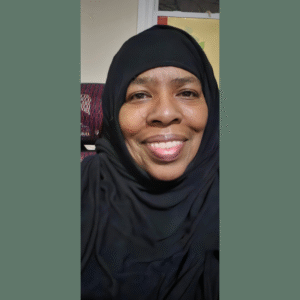 Dr. Candice Islaah Abd’al-Rahim is a writer, educator, researcher, community organizer and was a 2025-2026 ICJS Nonprofit and Civic Professionals fellow. Learn more about the ICJS programs for nonprofit and civic professionals here. Opinions expressed in this blog are solely the author’s. ICJS welcomes a diversity of opinions and perspectives.