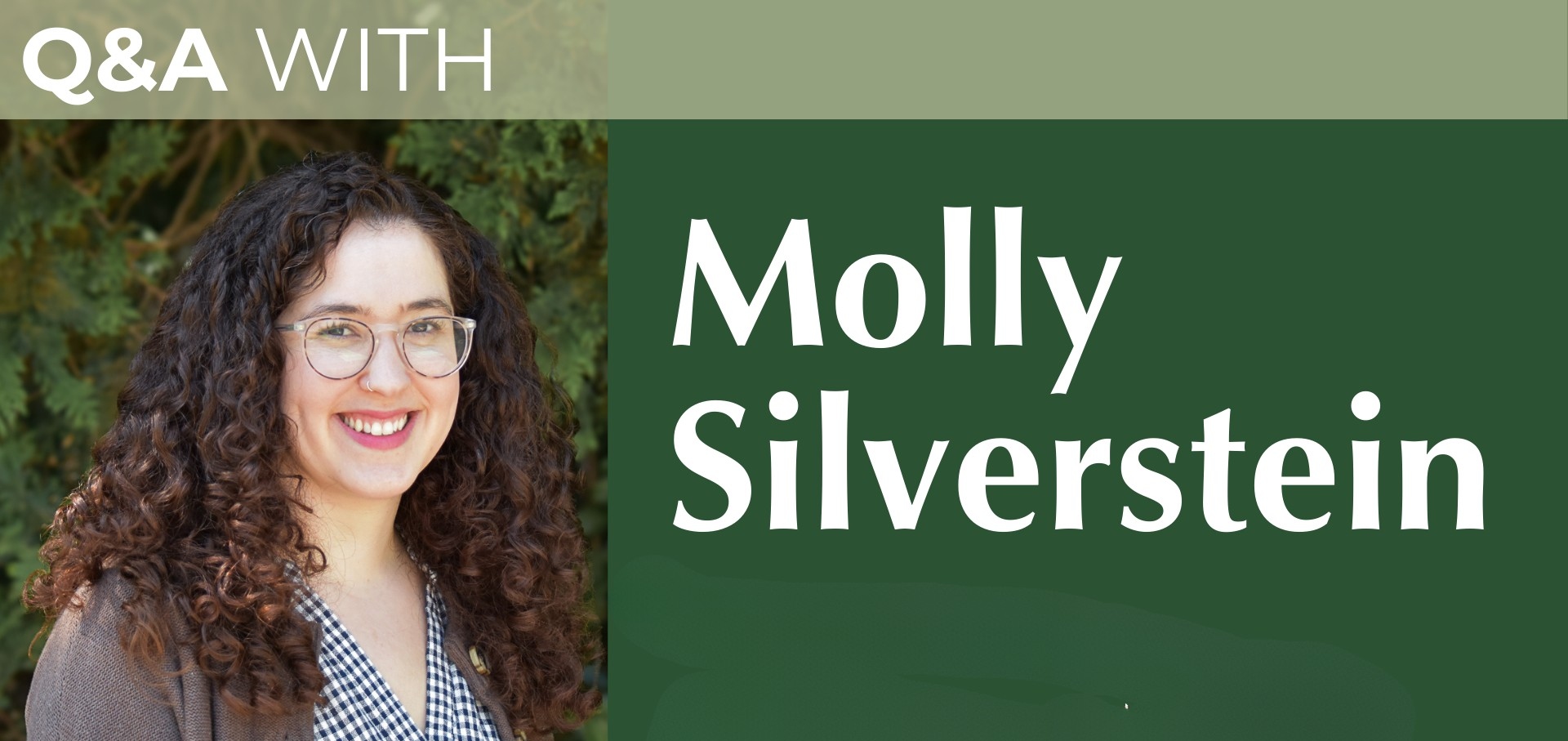
Molly Silverstein, Program Director for the ICJS Fellowship for Nonprofit and Civic Professionals, spoke with ICJS Director of Communications John Rivera about her path into interreligious work, what distinguishes this fellowship in the civic landscape, and why interreligious learning is essential for leaders working to build a multireligious democracy.
Q: What first brought you into interreligious work, and eventually to ICJS?
It was a very personal journey. I grew up culturally Jewish but very secular, and became spiritually curious in my twenties. This curiosity eventually led me to Harvard Divinity School, when I realized there were people who studied these questions and talked about faith and spirituality every day. Being surrounded by a diverse religious community—learning from Christian, Muslim, Buddhist, and Jewish friends—made “being religious” and “being interreligious” almost inseparable for me.
I also loved my chaplaincy training and experience facilitating discussions in a variety of contexts at Harvard. When I found the role at ICJS, it felt like a perfect fit. It allowed me to draw on spiritual care while also facilitating, program managing, and teaching. It’s a mix of the religious and the secular that feels exactly right.
Q: Before coming to Baltimore, did you know organizations like ICJS existed?
Not at all. I assumed the options were either chaplaincy—very context-specific, like a hospital or university—or something secular in the nonprofit world. I didn’t realize there were places where interreligious learning, civic leadership, and community building came together. Finding ICJS was genuinely exciting.
Q: How would you describe the Fellowship for Nonprofit and Civic Professionals to someone new to it?
It’s a yearlong intensive program for people working across the nonprofit and civic sector in Baltimore and greater Maryland. I see it as a mix between a class, a monthly community gathering, and dedicated time for self-reflection and self-development.
There’s a strong focus on what it means to build a multireligious democracy across different kinds of civic work—government agencies, community organizing, public media, museums, activism, and more. It’s also an opportunity to deepen your relationship with yourself and with the religious other. By learning to engage across profound difference, you learn a great deal about who you are.
Q: What misconceptions about interreligious work do you encounter?
A major misconception is that interreligious work is primarily about knowledge—knowing a lot about Christianity, Judaism, Islam, or “world religions.” Sometimes expertise can actually get in the way of dialogue.
Rachel Mikva’s concept of “interreligious fluency” is helpful here. The core skill isn’t encyclopedic knowledge; it’s a stance of openness and curiosity, and the ability to communicate and be in relationship across difference.
Q: What makes this fellowship distinct within the civic or nonprofit landscape?
I don’t know of many other programs like it. Professional development in this sector rarely focuses on religion, religious literacy, or interreligious relationships. Many leadership programs emphasize organizational strategy or community building, but very few connect that work to the religious and spiritual diversity leaders encounter every day.
This fellowship gives people intellectual, relational, and practical tools to engage religious difference as part of their professional lives.
Q: Why is interreligious learning important for civic leaders?
At the most basic level, we live in a religiously diverse society and world. Civic leadership is stronger when leaders have the tools to navigate that diversity well.
Religion shapes values, communication styles, and approaches to justice and service. When leaders understand how traditions approach concepts like justice or collective action, they can build programs that are more inclusive and accessible.
This work also cultivates humility. It challenges assumptions, builds the capacity to hold complexity, and gives leaders experience engaging perspectives vastly different from their own. That’s essential for effective civic leadership.
Q: What challenges arise when bringing a religious framework into civic spaces?
One of the biggest questions I hear is, “What is the connection?” People sometimes assume we’re working only with faith-based nonprofits, or they’re unsure why religion matters to their work.
The sector is incredibly diverse. Some Fellows come from religious organizations; others are completely secular, but work with religiously diverse communities. Once the connection clicks—once people see how religion shows up in their work—it makes complete sense, but it can take time.
There’s also anxiety around literacy. Many fellows aren’t academics or clergy and worry they don’t have enough background. The readings can feel dense because this isn’t their everyday lens. But that discomfort is part of the learning process.
Q: What does success look like for you in this fellowship?
Success is when someone leaves with more confidence in their ability to have honest, productive dialogue across difference. Many people come to this work because they feel they lack those skills in a polarized society.
It’s also a success when fellows feel comfortable bringing their full selves into the space—even when their perspectives differ from the group. That level of trust and vulnerability matters. It’s not about being contrarian; it’s about engaging authentically.
Q: What hopes do you have for the fellowship’s future?
I want to deepen connections in Baltimore’s civic ecosystem and build partnerships with organizations that see interreligious learning as central to their mission. I’d love alumni networks to become communities of practice that continue this work within organizations.
I’m also excited about expanding into sectors we haven’t fully reached—artists and writers, public health, mental health, labor organizing. There are so many places where this work is needed.
Q: What gives you hope as you think about building a multireligious democracy?
The Fellows. They are incredibly demographically diverse, and they bring real energy and commitment to building coalitions across difference. The fact that leaders like this exist and want to do this work gives me tremendous hope.