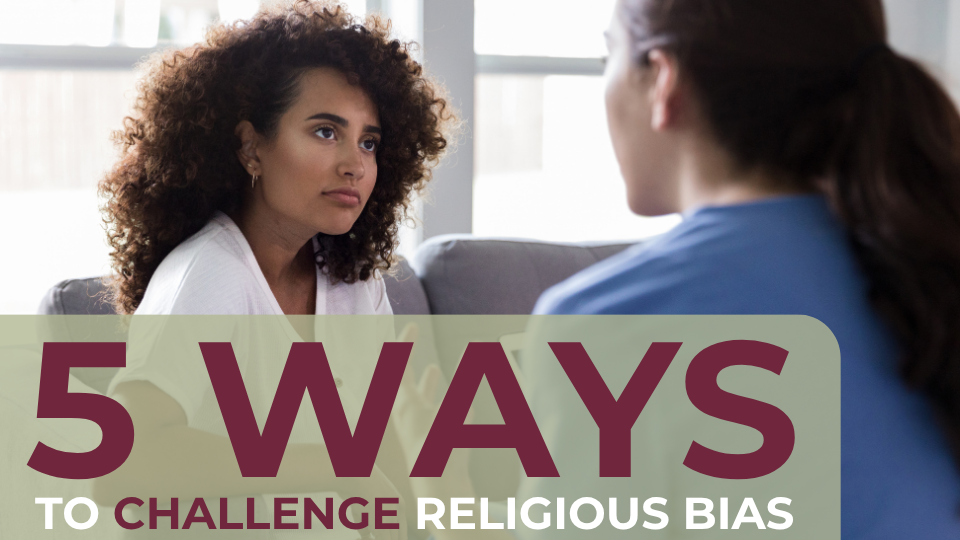
Religious bias doesn’t always announce itself. Sometimes it’s a joke that relies on an old stereotype, an offhand remark about someone’s religious practices, or an assumption about what people believe based on their religion. Jews, Muslims, and members of other religious minority communities often encounter this kind of bias, whether conscious or unconscious.
Antisemitism and Islamophobia, the names we give to two of these biases, have deep historical roots and both continue to shape how Jews and Muslims are perceived and treated in the United States. Their most extreme expressions make headlines, but prejudice also thrives in everyday conversations, political rhetoric, and social media.
What can any one of us do about it? More than we might think. Here are five places to start.
1. Learn About Religions Other Than Your Own
How much do you actually know about Judaism or Islam? And where did that knowledge come from?
Misconceptions often fill the gaps in our understanding of unfamiliar religious traditions. Reading about another religion, attending a lecture, or listening to people describe their own beliefs and practices can help us recognize assumptions we didn’t realize we held.
It’s also important to remember that religious traditions are remarkably diverse. There is no single Jewish or Muslim perspective on theology, politics, culture, or contemporary events.
2. Get to Know People Across Religious Differences
It’s harder to rely on stereotypes when you have relationships with the people those stereotypes target.
Consider visiting a synagogue or mosque when they have an open house, attending an interreligious program, or simply getting to know a neighbor or colleague whose religious background differs from yours.
These encounters don’t require you to set aside your own convictions or agree on matters of faith. They do require curiosity, openness, and a willingness to listen.
3. Challenge Stereotypes When You Hear Them
Some religious stereotypes have circulated for centuries. Claims that Jews secretly control banks, the media, or government draw on longstanding antisemitic conspiracy theories. So do accusations that Jews are inherently disloyal to their country.
Muslims face different but equally damaging assumptions, including claims that Islam is inherently violent or that Muslims cannot embrace democratic values.
These ideas sometimes surface in casual conversations or social media posts where they go unchallenged. Speaking up doesn’t have to mean starting an argument. Asking clarifying questions, such as inquiring where someone expressing a bias got their information, or offering a different perspective, can be a useful first step.
4. Don’t Hold an Entire Community Responsible for the Actions of a Few
Jewish Americans are sometimes expected to defend the actions of the Israeli government, regardless of their personal views. Muslim Americans may be asked to condemn acts of terrorism committed by people they’ve never met simply because the perpetrators claim to act in the name of Islam.
Both reflect the same troubling assumption: that members of a religious community share collective responsibility for the actions of others.
We should be able to debate government policies, criticize religious institutions, and condemn violence without holding entire religious communities responsible for the actions of individuals.
5. Express Solidarity When Others Are Targeted
When a synagogue is vandalized, a mosque is threatened, or someone faces harassment because of their faith, the response shouldn’t come only from the affected community.
A message of support, a public statement, or participation in an interreligious gathering can make a difference. But solidarity also matters in everyday encounters. When someone tells a joke based on a religious stereotype or makes a disparaging remark about another faith, speaking up rather than remaining silent can help challenge the prejudice behind it.
It’s especially important to stand alongside communities other than our own. Religious freedom and equal treatment mean little if we defend them only when our own traditions are threatened.
Where We Go From Here?
None of these steps will eliminate antisemitism or Islamophobia on its own. Both are sustained by histories, institutions, and political forces that require attention beyond individual actions.
But the way we respond to religious difference in our daily lives matters. We can question assumptions, get to know our neighbors, and refuse to let harmful stereotypes pass without comment.
At ICJS, this work is central to our mission of dismantling religious bias and bigotry. It’s also essential to building a multireligious democracy in which people of all religions, and no religion, have an equal claim to belonging.