Christian Nationalism
A Threat to Pluralistic Democracy
Christian nationalism promotes the idea that political power and public life should reflect a narrow Christian identity. Even when held by a small subset of the population, these ideas fuel a movement that undermines democratic norms and weakens religious freedom for all. As with antisemitism and Islamophobia, confronting Christian nationalism is essential to protecting a diverse and inclusive civic sphere.
Explore this curated collection of ICJS resources—videos, courses, articles, and more—to deepen your understanding.
Podcast: American Unexceptionalism
American Unexceptionalism is a limited-series podcast from Dr. Matthew D. Taylor and the Rev. Susan Hayward about what Americans can learn from people around the world who have resisted religious nationalism and authoritarianism.
Listen to the Podcast
Documentary Short: Spiritual Warriors
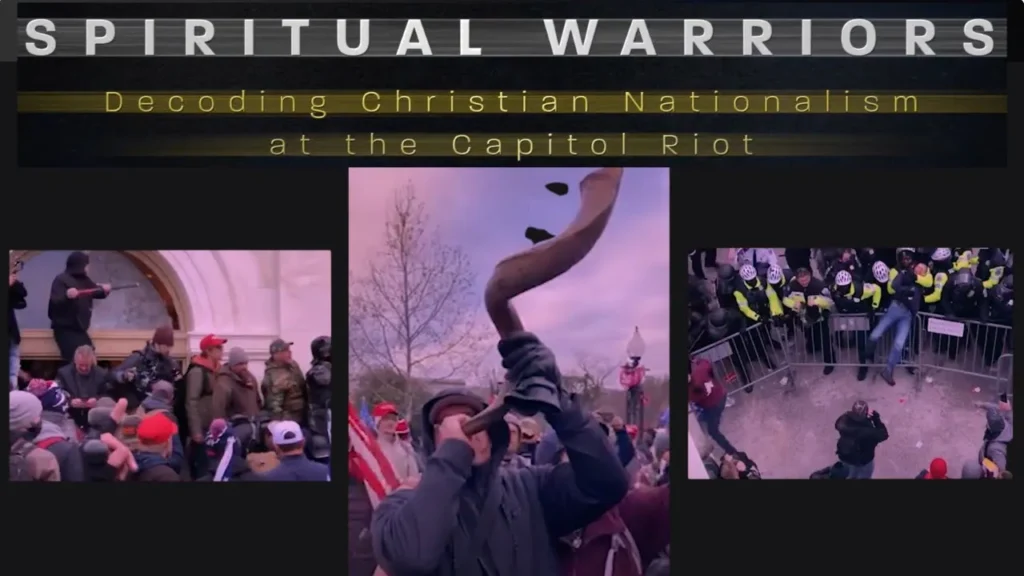 In this short documentary, Matthew D. Taylor describes the central role the New Apostolic Reformation, a relatively new charismatic Christian movement, played in instigating the Capitol riot. The NAR continues to be a force in American politics.
Watch video
Christian Nationalism Minicourses On Demand
Christian Nationalism (Un)defined

Even as the conversation about Christian nationalism has proliferated, there are raging debates about how to define it and understand its impact on American politics. This minicourse tries to understand these debates while not taking our eyes away from the peril of Christian nationalism.
VIEW MINICOURSE
Messianic Judaism and Christian Zionism
 Today some Christians also identify as being Jewish (a.k.a., Messianic Jews), and many Christians, known as Christian Zionists, support the modern state of Israel for theological reasons. This minicourse examines the background and present-day complexities of these Christian identifications with (or attachments to) Judaism.
VIEW MINICOURSE
Roots & Reality of Christian Nationalism
 Is the United States a “Christian nation,” a “Judeo-Christian nation,” or a “secular nation?” This minicourse explores the theological and historical ideas that underpin the American Christian nationalist narrative, examining both the deep roots and the present-day realities of this Christian nationalist identity in the U.S. and consider the threat that it poses to American religious pluralism.
VIEW MINICOURSE
Christian Nationalism Events On Demand
Democracy Under Pressure: Faith, freedom, and the future of public life
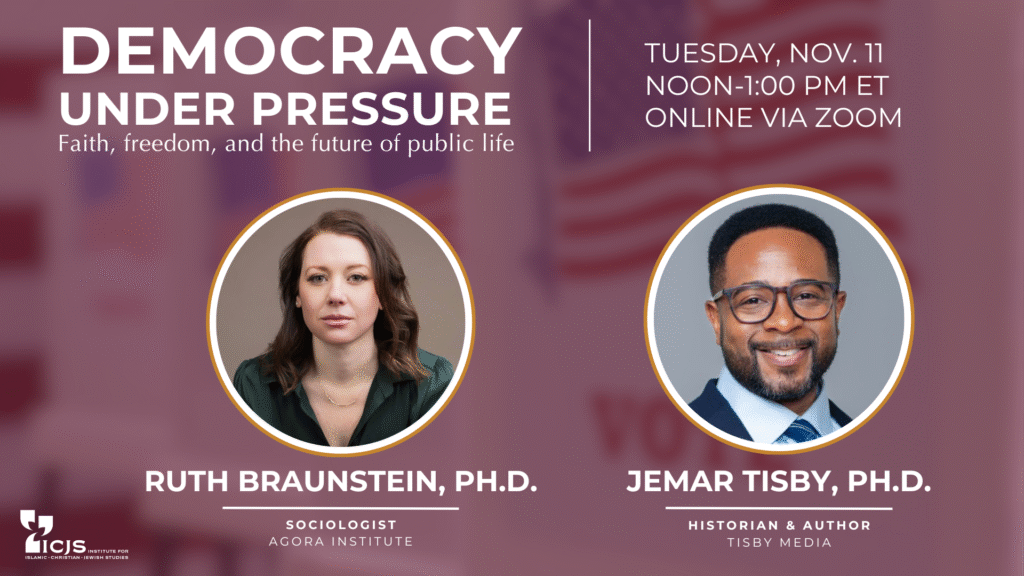 Since the 2024 election, questions of free speech, religious liberty, pluralism, and the rule of law have become increasingly urgent in U.S. public life. How do we navigate the social and political challenges of this moment, and what resources can religion, history, and sociology offer for sustaining a multireligious democratic society?
WATCH VIDEO
U.S. & Brazil: Parallel Christian Insurrrections?
 On Jan. 8, 2023 thousands of supporters of former Brazilian president Jair Bolsonaro stormed government buildings in the capital city of Brasilia, seeking to overthrow the new administration of Luis Inácio Lula da Silva and reinstall Bolsonaro. The insurrection had eerie echoes of the Jan. 6, 2021 Capitol riot.
WATCH VIDEO