I grew up in a mixed-religion family—one side Jewish, one side Methodist. My parents were effectively nonreligious, but they took my siblings and me to Unitarian Sunday school and encouraged learning about other religions.
Because of my background, I was intrigued to learn about the Fellowship for Nonprofit and Civic Professionals at the Institute for Islamic, Christian, and Jewish Studies. Not only was I interested in learning more about religions that I was not very familiar with, like Islam, Buddhism, and others, but I also hoped to gain a new perspective on my own nonreligious views, particularly in light of my work at a faith-based nonprofit organization.
One of the goals of the fellowship is to promote religious pluralism. We learn to respect and tolerate a multitude of religious viewpoints in order to better understand and communicate across differences. The experience of the fellowship gave me greater insight into the belief systems of other religions.
It also helped me to better understand some of the questions I had about the roles and beliefs about women in religious practices that seemed to my feminist self to be discriminatory, if not misogynistic. It gave me the opportunity to hear from strong, eloquent women about how they felt empowered by their faith and not diminished by it, as I had assumed was the case.
The fellowship also helped me to find my voice as a nonreligious (“none”) person in a space, a country, and a world filled with people of faith. Having this experience brought me to the realization that it is important for the nonreligious perspective to be heard if we are to find our way to truly pluralistic dialogue, with respect and understanding.
Just as it can be difficult for non-religious (and agnostic and atheist) people to understand people of faith, I find that religious people often have difficulty accepting or believing that it’s OK not to have faith and/or religion, that non-religious people can still adhere to a moral and ethical code, even without a god that prescribes it, and not be missing something in their life based upon the fact that religion and religious faith are not in it.
Though the U.S. Constitution mandates a separation of church and state, to someone who is nonreligious and not “faith-based,” it still feels like not being religious is viewed as a deficiency and something to either be pitied, discouraged, and/or disrespected.
ICJS has helped me see that staying quiet during discussions that involve religion and faith does not foster a truly pluralistic environment with respectful and collaborative communication. Honest dialogue that includes all religious perspectives—as well as the “nones”—is what we need to effectively face our political, cultural and societal challenges, at local, state, national and global levels. This is how we will truly get to pluralism.
July 2026
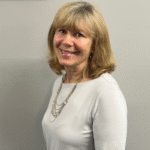 Val Twanmoh is the senior advisor for advocacy and policy at Catholic Charities of Baltimore and was a 2025-2026 ICJS Nonprofit and Civic Professionals Fellow. Learn more about the ICJS programs for nonprofit and civic professionals here. Opinions expressed in this blog are solely the author’s. ICJS welcomes a diversity of opinions and perspectives.