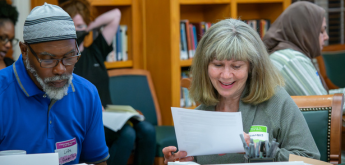
Nonprofit and civic organizations regularly navigate religious difference, whether through workplace culture, community partnerships, public programming, or questions of equity and belonging. Yet many leaders have little formal space to reflect on how religion shapes the environments in which they work. Over the past year, fellows in the program put those ideas into practice through dialogue, reflection, and applied learning. As the fellowship comes to a close, Molly Silverstein reflects on what she and the cohort learned together, identifying four lessons that emerged from a year of engaging religious difference in nonprofit and civic life.
1. Religion is already in the room.
Nonprofit and civic spaces often default to separationism: the assumption that religion belongs in private life and has no place at work. But “religiously neutral” organizations are often not neutral at all. Calendars, holidays, professional norms, and unspoken assumptions frequently reflect a Protestant Christian default. Employees bring wide-ranging relationships to religion with them every day. Actively engaging religious pluralism advances equity and helps people bring their full selves to work.
2. Dialogue deepens learning.
ICJS has long known that dialogue across difference can be transformative. This year’s cohort discovered something more specific: that dialogue is also a powerful tool for developing ideas. Fellows utilized dialogue to develop and deepen their applied learning projects. They were paired as dialogue partners to ask each other questions of curiosity and reflect back what they heard. Those conversations shaped and sharpened their applied learning projects in ways that independent work could not.
3. Nonreligious voices are vital to the conversation.
The fellowship draws together people across the full spectrum of religious practice and identity. Nonreligious fellows are often surprised to find how deeply they can engage in conversations about religion and pluralism. Secular professionals in civic organizations frequently navigate religious difference on behalf of the communities they serve, often without language or frameworks for doing so. Their perspectives are not peripheral to this work. They are essential to it.
4. Situated engagement means knowing where you stand before you act.
The fellowship invites fellows to develop situated engagement: an honest awareness of their own position within the communities, histories, and power dynamics their work touches. Before engaging meaningfully across religious difference, fellows have to know where they themselves stand. That means exploring their own religious or ethical frameworks: what they believe, how they came to believe it, and how those commitments shape the way they work. Knowing where you stand is what makes genuine encounter with difference possible.
June 2026
Read an interview with ICJS Program Director Molly Silverstein.
If you are or know a civic or nonprofit professional in the Baltimore area who might be interested in learning with us next year, fill out this form.