
I am a firm believer in the power of one-on-one relational meetings in my ministry and professional life. Starting my new job at the Governor’s Office for Children on December 10, 2025, I planned to meet one-on-one with at least half of my new colleagues within my first 90 days.
It was a weekday morning in February when one of my Jewish colleagues and I finally settled into a breakfast meeting at Garden and Grounds, the kind of place with good coffee and good cheese grits. I ordered a full breakfast sandwich while he skipped breakfast and decided on coffee instead. With my big sandwich, I instantly felt like I was overdoing it, but he was very kind. (I asked for an away container and only ate half my sandwich.)
I was excited to meet him because I had heard about his fundraising expertise. Over breakfast, I learned how he spent many years doing hard things on the philanthropic and international peacemaking scale as a man of deep faith and deep commitment to his justice. As a Christian, I shared my foundational scripture, Micah 6:8:
He hath shewed thee, O man, what is good;
and what doth the Lord require of thee,
but to do justly, and to love mercy,
and to walk humbly with thy God?
(Authorized King James Version of the Holy Bible, Micah 6:8)
We had come together to talk about our anti-child poverty work in the Governor’s Office, but I also wanted to pick his brains to see what he thought about my new ICJS Fellowship for Nonprofit and Civic Professionals.
I wanted to learn how I might implement my Education Congregations idea (my project for the Fellowship), but I also wanted to put away my agenda and just learn about him. He and I talked for a bit about Israel and the complexity of Palestinian and Jewish relationships. He talked about the antisemitism that he and so many have navigated over the years locally and globally, which had led him to do antisemitism work even in his work for the governor.
I thought about what I was learning at ICJS about the importance of becoming fluent in interreligious dialogue and the importance of listening. As I listened, I honestly wrestled to be as open as I wanted to be.
I thought back to a memory of hardship that a former colleague, a Palestinian-American woman, experienced when traveling back to the US—an experience where she felt herself a target of great hostility. She told me that in some ways it was easier to be Palestinian in Gaza than in the United States. Not because it was safe but because in Gaza, she knew exactly how people felt about her.
In New York City, she had to navigate public spaces where she felt people were against her based on her identity. I thought of my own experience as a Black woman in places where I felt a sense of unbelonging. I struggled because I realized the privileges that Christians and many Jews in America have that many Palestinians do not. And I struggled because I also knew antisemitism is real. I took a risk and shared this dissonance I was experiencing with him, who, of course, was gracious.
Mostly, I realized that religious tensions are not issues to be debated but things about which to dialogue. It was clear that because we sat down for a half sandwich and coffee that no matter the internal and external tensions within and around us, we could work together to end poverty as colleagues who clearly shared so many values.
June 2026
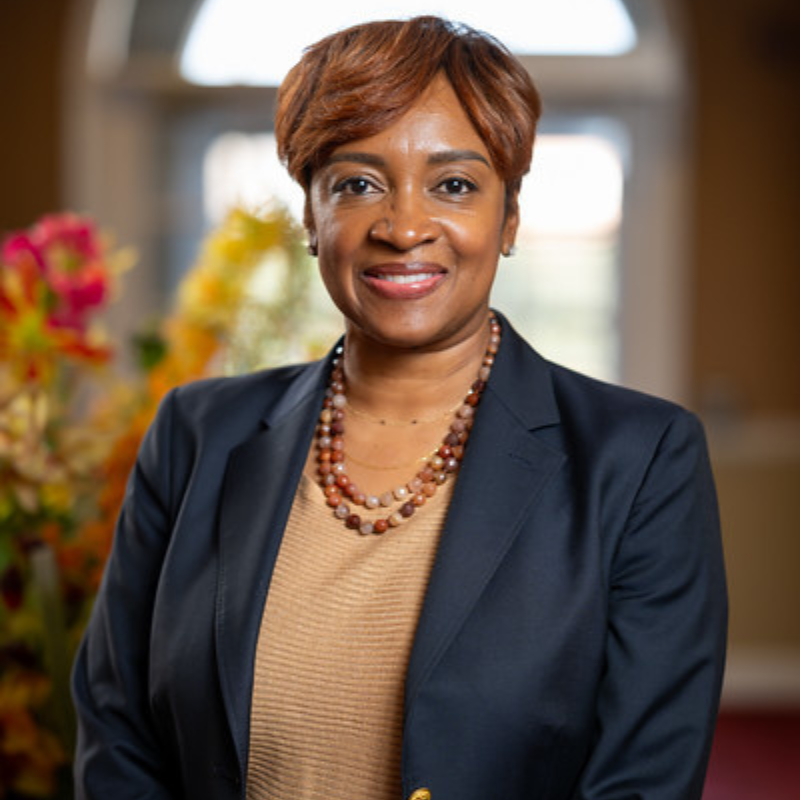 Ojeda Hall-France is the executive director of Executive Director of the ENOUGH Initiative at the Governor’s Office for Children and was a 2025-2026 ICJS Nonprofit and Civic Professionals Fellow. Learn more about the ICJS programs for nonprofit and civic professionals here. Opinions expressed in this blog are solely the author’s. ICJS welcomes a diversity of opinions and perspectives.