Throughout the Teachers Fellowship, I’ve come to understand how important it is to teach about religion in schools—especially minority religions. It’s essential for majority communities to respect, support, and uplift minorities. The goal isn’t always to compare religious practices or try to make sense of them from our own perspectives, but rather to learn, listen, and appreciate. As we discussed in the Fellowship: education eradicates ignorance.
At Roland Park Country School (RCPS), the “Branches and Leaves” affinity groups offer minority Lower School students a space where they can connect with others who share similar identities. These groups create a sense of belonging and validation for students who may not always see themselves represented in the broader school environment.
Our school has hosted two religious cultural events this year that celebrated minority communities—both of which were deeply appreciated by those involved. These events demonstrated that friendship and connection can overcome fear and misunderstanding.
The first was an Eid al-Fitr celebration, co-sponsored by the DEI office and the Muslim Association. The Lower School Muslim Branches and Leaves group shared the history and customs of Eid al-Fitr, followed by a celebration with traditional Middle Eastern food, henna art, and crafts. It was a beautiful way to honor the Muslim community and educate others in a joyful, welcoming setting.
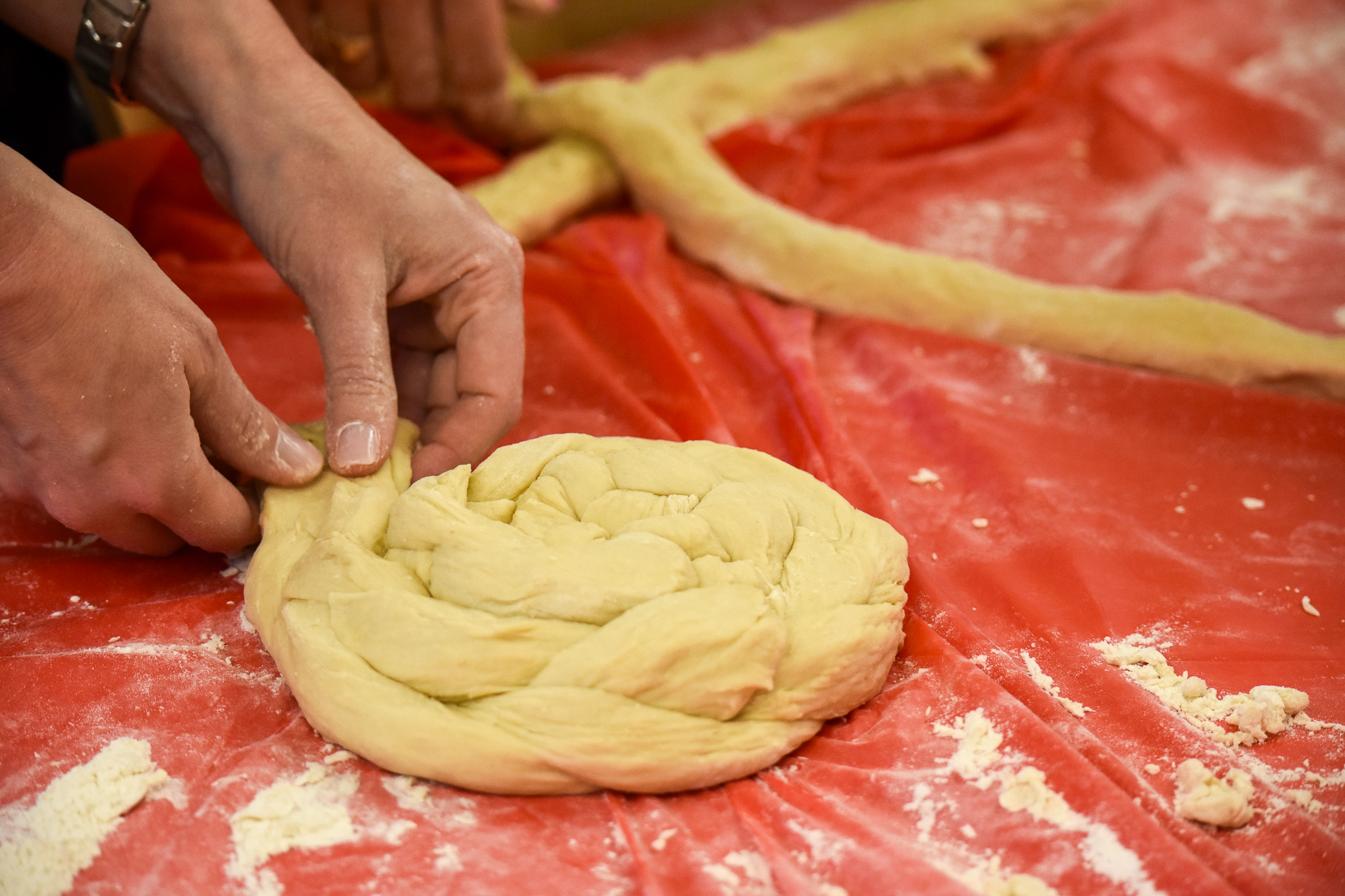
As the leader of the Jewish Branches and Leaves group in the Lower School, I also had the opportunity to sponsor a community event for my ICJS project, which was a challah bake. My goal was to create a space for the Lower School group to connect with the wider RPCS Jewish community, while also inviting non-Jewish allies to join us in a spirit of unity and support—just as we had done during the Eid celebration.
Another reason I chose to host a challah bake at RPCS, an all girls’ private school, is because baking challah is one of the three mitzvot (sacred obligations) traditionally reserved for women, symbolizing their unique role in nurturing life and shaping the world around them. During the event, I shared the cultural and spiritual significance of women baking challah in the Jewish religion. When women gather to bake, we tap into something ancient and powerful. We mix flour and water—the most basic ingredients—and turn them into something greater than the sum of their parts.
In Jewish thought, the physical world and the spiritual world are deeply intertwined. Flour represents the physical—our bodies, the earth. Water symbolizes the soul, our thoughts, our inner life. Making challah is like a metaphor for what it means to be human: we are a blend of body and soul, just like dough is a blend of flour and water.
When women bake challah, we’re doing more than preparing food. We’re participating in a sacred act of transformation. We take the raw gifts of the earth and elevate them—just as we hope to elevate ourselves and the world around us—it’s not just about making bread, it’s about connection. This event was a moment to build awareness, foster curiosity, and create a welcoming atmosphere where everyone could feel part of a meaningful Jewish experience.
Ultimately, teaching religion in schools isn’t about drawing constant comparisons or seeking sameness. It’s about recognizing the richness and uniqueness of each tradition—and allowing ourselves to be inspired by that diversity.
 Heather Samet was a 2024-2025 ICJS Teachers Fellow. At the time of the fellowship, she taught at Roland Park Country School. Learn more about the ICJS programs for teachers here.
Opinions expressed in blog posts by the ICJS Teacher Fellows are solely the author’s. ICJS welcomes a diversity of opinions and perspectives.