In January 2024, 15 weeks after the eruption of violence in Gaza, ICJS convened an interreligious dialogue about the conflict. I felt called to attend, though I was unsure of what to expect. Everyone, it seemed, was struggling in their own way with the shock and dismay evoked by the news that had been coming from the Middle East. Among my Muslim and Jewish acquaintances, the emotional burden they carried was palpable. I wondered what benefits a dialogue, however well facilitated, might offer during such a time of such intense grief and uncertainty.
I was also mindful of my positionality within the conversation. As a Christian with no direct connections to Palestine or Israel, I questioned whether my participation was even appropriate. I decided to attend the dialogue resolved to learn and, more important, to listen.
Numerous religions emphasize the importance of active listening. In the Christian contemplative tradition, for example, practitioners are told to listen to what God is saying to them in the silence, and to remember that God is listening to them as well. Active listening is also an invaluable skill for anyone working toward peace and social justice. Within the field of restorative justice in particular, listening is essential to repairing relationships between those who have done harm and those who have had harm done to them.
The ICJS approach to dialogue is grounded in this sort of deep listening. Its statement about the value of dialogue includes an invitation for participants to practice “patience, humility, curiosity, and courage” when engaging in dialogue. The statement goes on to remind participants that “the outcome of dialogue does not require agreement, and meaningful relationships can exist even where there are irreconcilable differences.” Commitment to such a framework requires participants to let go of the need to be “right” for the duration of the conversation, and to be open enough to understand different points of view. This can only be accomplished through active listening.
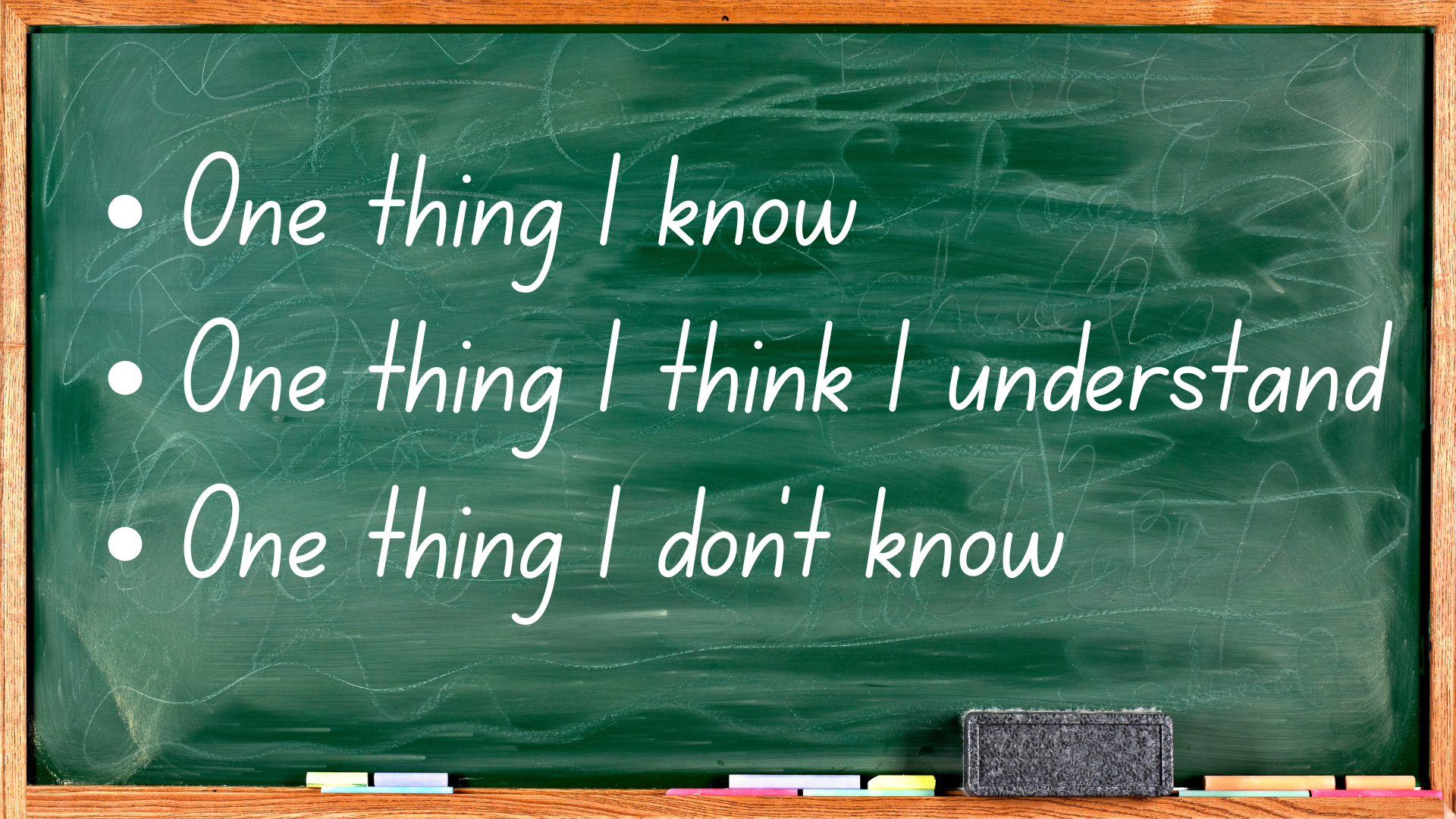
The dialogue session in January included members of my Justice Leaders Fellowship cohort and members of the ICJS Teachers Fellowship. Among the attendees were Muslims, Jews, Christians, people affiliated with other traditions, and people who professed no religious tradition. Prior to the session, each participant was asked to complete an anonymous form that asked them to list: “one thing I know with certainty;” “one thing I think I understand (but might be wrong about);” and “one thing I don’t know.” ICJS staff collected the responses and used them to guide the conversation.
Tentatively at first, and then with increasing confidence, attendees shared their perspectives. One participant offered a terrifyingly vivid description of the destruction wrought by munitions of the type being used in Gaza. Another spoke of the wrenching pain of communicating with beloved family members whose viewpoints on the conflict were diametrically opposed to their own. Another drew upon their extensive knowledge of the region to provide helpful geopolitical context. I was powerfully struck by the immense vulnerability, bravery, and trust—in each other, in the facilitators, and in the dialogue process—that participants displayed over the course of the session.
Against the enormity of the horror and suffering endured by those directly and indirectly affected by the violence in Palestine and Israel, mere listening seems a wholly inadequate response. Dialogue alone cannot bring about peace or justice, especially when bombs are still falling. Yet the act of bearing witness, and the deep listening it requires, is essential to bringing about a more just world. By facilitating interreligious dialogue on the issues that affect us, our communities, and the world we live in, ICJS is opening necessary spaces for us to listen, to learn, and to take compassionate action.
 Kevin Griffin Moreno is Special Assistant to the President at the Maryland Institute College of Art, and he was a 2023-2024 ICJS Justice Leaders Fellow. Learn more about the ICJS programs for community and nonprofit leaders here.
Baltimore is part of a national conversation around questions of justice, race, and community. Members of the ICJS Justice Leaders Fellowship consider how Jewish, Christian, and Muslim teachings and practice can contribute to the public conversation about (in)justice. Opinions expressed in this blog are solely the author’s. ICJS welcomes a diversity of opinions and perspectives. We do not seek a single definition of justice between or within traditions.